

Goodbye Soap…Hello Beans! YES – Beans!!
First Considered
Soap-making tends to be at the top of the list of preppers’ considerations for sustainable skills to learn. After all, soap is used and needed daily. Making homemade soap was also one of my first skills that I learned. I have to admit, it is fun and rewarding. Homemade soap also makes greats gifts, trade items, or useful for cottage industry income.
Cons
However, there are some disadvantages. Some might find it hard to obtain lye, and extracting lye from hardwood ash can result in inconsistent batches. For me, the biggest concern is that soap is made from fat. With the goal of not having to purchase items anymore, fat becomes precious. Growing fat from plant sources isn’t easy. Perhaps the best sources are coconut and seeds like sunflower for example. Animal fat can be rendered and used for soap making, but we tend to harvest deer which doesn’t have lots of fat to begin with. We would rather render our deer fat for cooking than for soap.

Historical Reference
I like to look at the past when considering methods and processes. Have people always used fat for making soap? It seems odd to me that God would design a system that required our precious little access to fat, to be used up in making our soap. An online search says that the first soaps were made in Egypt with fat and wood ash lye. Just because that is what was done in history, doesn’t mean God doesn’t have a more resourceful option. So I began to pray about it.
God’s Designs
What do we know about God’s character and designs? He says that His ways bring life and they are not a burden. When He created the earth and put Adam and Eve in the garden, He said that everything was “perfect”. This says to me that they had everything they needed. The choices that mankind has made over the years, has really interfered with God’s design for how we should live. However, I am convinced that no matter where you live, you should be able to find a resource that allows for the provision of your basic needs: food, water, shelter, clothing, etc. Since soap is right up there with basic needs, I would have to believe there is also a readily available solution for this as well.
Soap Nuts
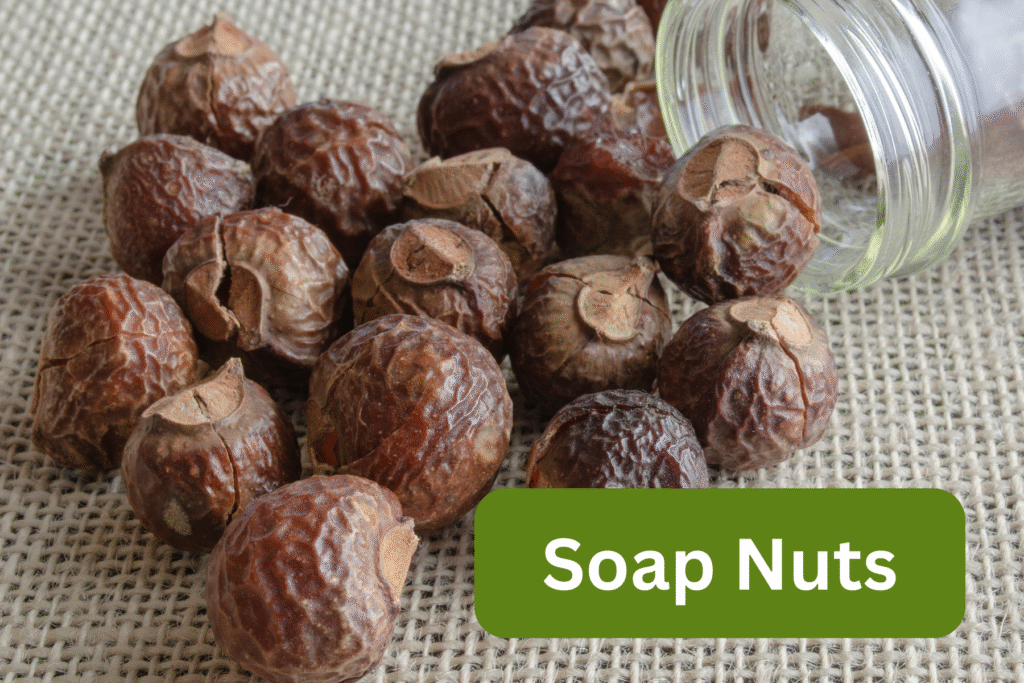
Then I found soap nuts! These are the outer shells of a nut/fruit from the “Shampoo Tree”. I couldn’t believe how well they cleaned; from dishes to laundry! The only problem was that the trees grow in India and China; which makes them not my resource for sustainability. Plus, for bathing or washing your hair with soap nuts, it requires you to make a tea from the nuts. This tea can sting your eyes pretty bad, which can easily happen when washing your hair.
Saponins
Soap nuts clean well because they contain saponins. So what are saponins? They are “a diverse group of naturally occurring plant compounds that get their name from their ability to create a soapy lather when agitated with water”. According to a google search, this is how they clean: “Saponins clean by acting as natural surfactants, reducing water’s surface tension and allowing dirt and grime to be lifted and washed away. Their amphiphilic structure, with both hydrophobic and hydrophilic components, enables them to bind to both water and oils, effectively emulsifying and dissolving grease and dirt. This allows for a natural and effective cleaning action, similar to how synthetic detergents work, but without harsh chemicals.” WOW! I have also noticed that some natural soaps, like castile soap for example, don’t seem to do a good job with grease – but natural saponins do! So…are there other plants that contain saponins?
Ferns
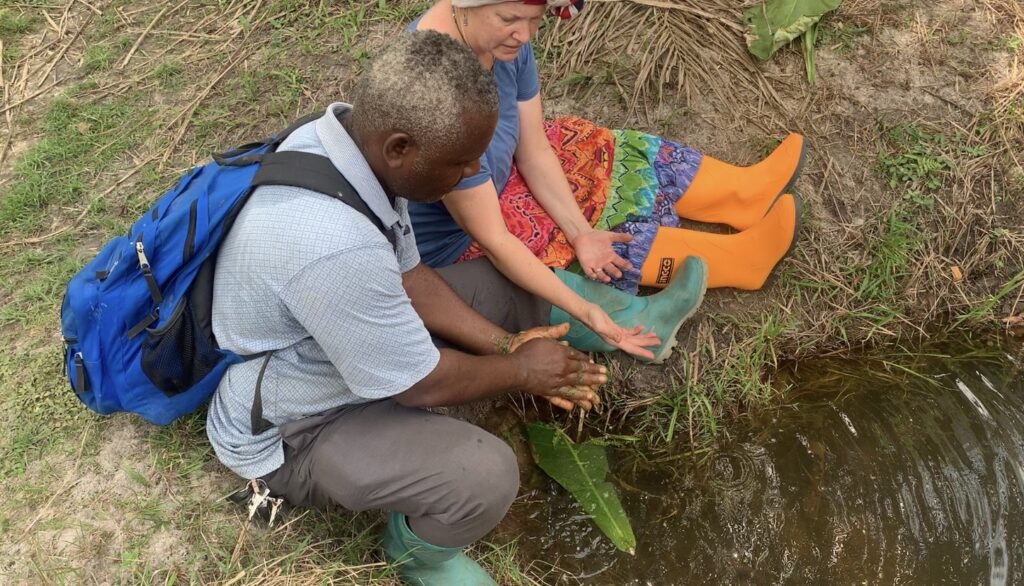
The next plant I learned about that contain saponins was ferns. I was in the jungle in Liberia, West Africa, when I got something sappy on my hands. Our program director said “oh, grab a fern leaf, and come over to this water pond”. I was so amazed at how well I was able to clean my hands just by rubbing them with a fern leaf and rinsing. My mind began to race. We have ferns at home! I started throwing fern leaves in my blender with water to strain into my sink basin. I also made a vinegar tincture with ferns, which gave me the added bonus of vinegar in my cleaning. Then one day, as I was researching and preparing for teaching a class on beans, I read “Beans are one of the highest sources of saponins”. My mind was blown!
Introducing Beans
I knew it from the start. Beans have to be the answer I have been praying for. Beans, lentils and peas, are grown in all climates of the world. Beans are low cost and accessible for everyone. I began experimenting with different ways to use beans for cleaning. I had to create it myself, as I have still not found anyone else in the world who uses beans for cleaning. But they work great! This is a prime example of how God is able to teach us, when we ask Him and not Google.
Health Benefits of Saponins from Beans
Before we dive into the process of cleaning with beans, I want to add that saponins are also great for our health. When consumed, saponins exhibit antimicrobial, anti-inflammatory, antifungal, and antiviral effects. They can positively influence cholesterol levels. It is like cleaning your internal body, especially your cardiovascular system. Saponins have even shown potential for cancer treatments. In fact, beans contain IP-5, a plant compound that doesn’t allow tumors to grow. Quality studies have proven the longest lived people groups on earth consume the most amount of beans. Because beans are so healthy for you, it also makes them a healthy cleaning choice. I have long had the rule that I don’t put things on my skin, or bathe in solutions, that I couldn’t eat or drink. Our skin absorbs a lot!
Using Beans to Clean
Your mind is probably imaging mashing cooked beans and how on earth could this clean something; haha. We don’t use the cooked beans themselves. Here are some better options:
- Grind dried beans into a powder (flour). Then blend a spoonful of bean flour into a pint of warm water. I like to use a blender for this but see what works best for you.
- Drain the liquid from a can of beans (including the liquid from rinsing the beans)
- Cook some beans for supper and then use the cooking water to clean with.
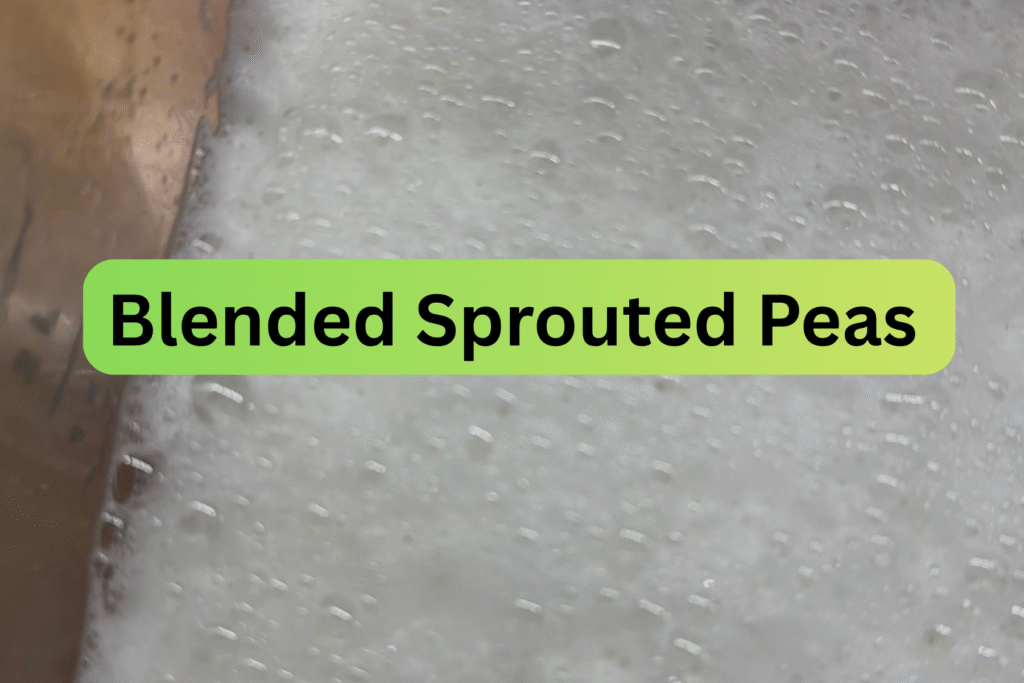
- Sprout peas, lentils, or mung beans. This can increase saponins by up to 28%! Then simply whiz a small handful of the sprouts in the blender with around a pint of warm water.
NOTE: You can add vinegar and/or essential oils as desired
Doing the Dishes
I like to rinse my dishes first, and set them to the side of my sink area. I fill one basin (or sink) with hot water. I blend a spoonful of bean flour, or a small handful of bean sprouts, in my blender with around a pint of warm water. I pour this blended solution into my dishwater (add some citrus essential oil if desired). I don’t bother to strain this mixture as any settlement will simply fall to the bottom of my sink and not stick to the dishes. Then I prepare a rinse basin (or your other sink) with hot water and a few Tablespoons of vinegar. You could add some citrus essential oil to this as well; like orange, lemon, lime, or grapefruit. I make my own vinegar and infuse it with dried orange peel to save money over buying essential oils (and this is optional anyway – the beans will clean well enough on their own). I find it enjoyable to wash dishes this way. You won’t believe how squeaky clean the dishes are! SIDE NOTE: Dr. Axe in his book “Eat Dirt”, sites a study that shows improved gut microbes when washing dishes by hand over using the dishwasher! Our obsession with everything being sterilized to death, is causing literal death of gut bacteria strains.
Doing the Laundry
I have found the cooking liquid from beans, or from canned beans, seems to work the best for doing laundry. If you blend bean flour in the blender with water, even after straining, you still might find some tiny bits of bean flour stuck to your clothes. When using just the cooking liquid, there is nothing to stick to your clothes. Using the liquid from one 15 oz can of bean (plus the liquid captured from rinsing the beans), washes one extra large load of laundry. The bean liquid does an excellent job cleaning and freshening your clothes, but it won’t remove stains. Be sure to pretreat any stains. During the rinse cycle of the washing machine, I add 2 Tablespoons of vinegar (and essential oils if desired). The vinegar naturally softens your clothes while also being an excellent cleaner.
Taking a Bath
I love soaking in the tub. In the past, I have found soap bars to dry out my skin, requiring me to use a lot of coconut oil to rehydrate my skin after bathing. When I take a bath I have the added benefit of soaking in beneficial liquid, and allowing my skin to absorb the solution. For example, I could make a gallon of lavender tea and pour that into my bath water. I also like to add my homemade vinegar to the bathwater, as vinegar softens the skin. I use my blender to whiz up some bean flour or bean sprouts into a nice lather to add to the bath water as well. Generally I mix up about twice the amount that I would normally do if I were doing the dishes. NOTE: the lather will disappear quickly, but the cleaning power is still present.
Taking a Shower
You will never feel so clean! To take a shower, simply put the bean liquid into a squeeze bottle. You can squeeze it directly onto your skin while in the shower, or use a sponge to scrub your skin with the bean soap. This is a powerful wash as the bean liquid is not diluted as with the case of taking a bath. You can always add a spoonful of raw apple cider vinegar, or some essential oils as desired. I actually like to thicken the bean liquid on the stove by using a few tablespoons of corn starch, flour, or other thickener. To prevent lumps, put the starch/flour into a separate glass and add a tablespoon of water. Stir until smooth. Then add to the heated bean mixture and boil a minute or two until thickened. Let it cool, add any desired additions, and place in a squeeze bottle. Here is another trick to try: blend okra into the bean water to naturally thicken it. You could also try soaking some okra in the bean liquid inside the fridge over night. Finally, most people are used to smelling fragrance while showering. Most of those are actually not healthy to be breathing in. If you can get used to fragrance free showering, then it will be game on!

Not Suitable for Everything
So far, I have found success using beans for washing the dishes, doing the laundry, bathing myself, mopping the floors, cleaning and dusting, and cleaning mirrors. The only thing I haven’t mastered is using beans with an electric dishwasher. I have considered reducing the bean liquid down to a concentrated liquid; maybe adding some gelatin to it in order to prepare it like you would portable broth cubes. Then use these cubes to put in the dishwasher ‘soap pod” area. But honestly, I prefer doing dishes by hand – so I am not that motivated to master the electric dishwasher option. Let me know if you master it!
Conclusion
In summary, using beans for our daily cleaning tasks has so many wins. It is better for the environment, especially if you have food growing outside that has deep enough roots to access the ground water. It is extremely economical. I receive abundant peas from our Pigeon Pea trees. Even if you purchase beans, you can find dried beans at the Dollar store! Beans are also readily available no matter where you live in the world. Finally, using beans for cleaning is a fast and easy process. No dedicated time needed, or having to wait weeks for curing. I bet you can clean something with beans today!