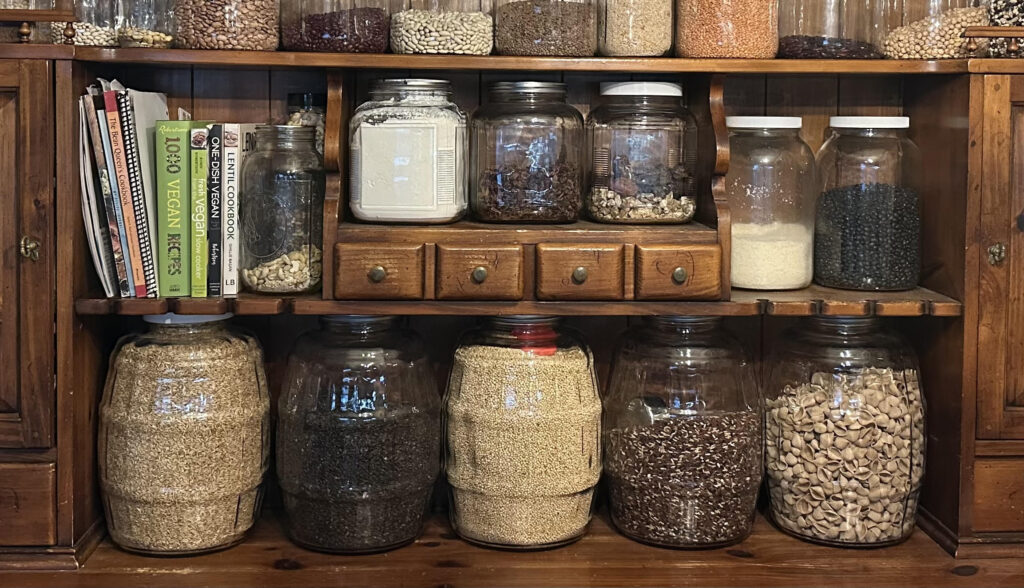
Goodbye Store-bought Flour: A Healthier Plan
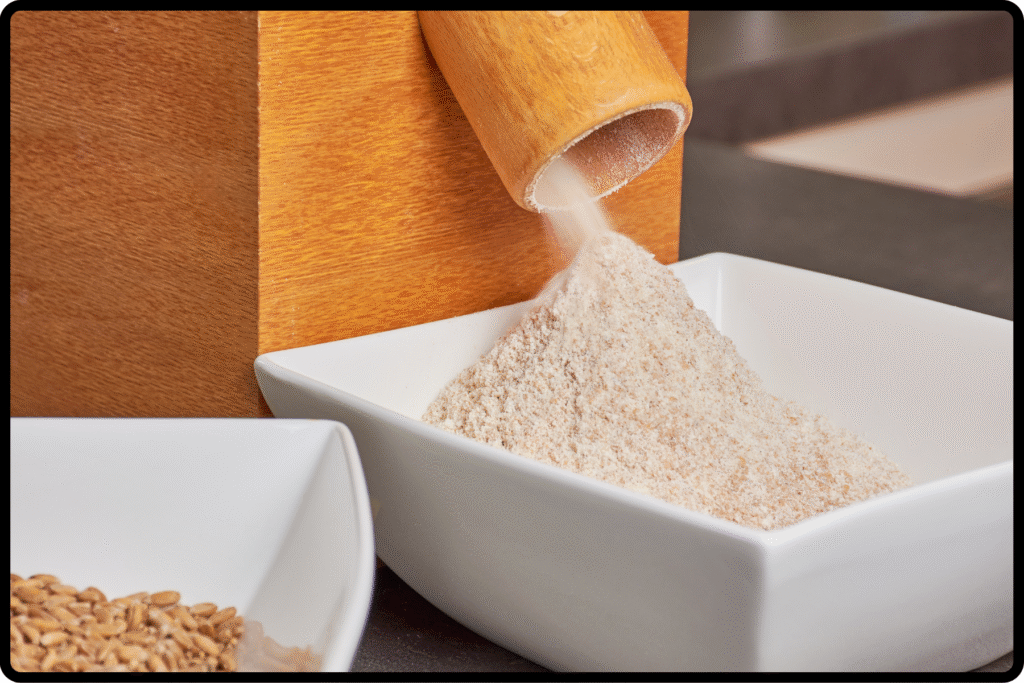
High Importance
I consider today’s topic of utmost importance. My flour grinder is equally important to me as my refrigerator. If anything ever happened to it, I would replace it immediately. Why? Keep reading…
Mankind’s Attraction to Light Flour
Without modern machinery, it takes a lot of manual labor to reduce whole grains down to fine white flour. Having white bread, therefore, became a sign of wealth historically. It was the King’s food. Does scripture have anything to say about that?

Nutrients in Grain
Ancient grains, like Einkorn (original wheat), contain an impressive profile of key essential nutrients like protein, phosphorus, potassium, vitamins including B6, B3 (Niacin) & A, essential fatty acids (Vit E), beta-carotene, lutein, and trace minerals. The grain itself has an inner germ (where healthy fats are), an endosperm (where starches are concentrated), and an outer bran where fiber and more nutrients are found.
Refinement
Grains were designed to be eaten as a whole, complete, package. Once a grain is crushed, nutrients begin degrading upon exposure to oxygen. In the first day alone, 45% is lost with 90% being lost after just 3 days from milling. The starch is stable, but nutrients like fat-soluble vitamins and certain minerals just can’t survive oxidation. In order for flour to be sold in stores, everything must be removed except for the starch. Whole wheat flours sold in stores have also had their fat-soluble vitamins and certain minerals removed. The only difference here is that the bran is added back in. I can personally testify that making homemade bread with purchased “wholegrain” flour doesn’t turn out AT ALL like homemade bread that was made with fresh milled grain. Zero comparison.
Industrial Roller Mills
Commercial grinders were established in Europe during the 1860’s, reaching America by the early 1900s. Between 1906 and 1940 more than 3 million Americans were affected by pellagra with more than 100,000 deaths. Pellagra is a disease resulting from a lack of niacin. Once they started adding niacin back into commercially sold flour, the pellagra epidemic was resolved. My takeaway is not that “oh, man found a solution… we just need to add niacin” but that there are very real consequences to changing our food from what God had intended it to be for our sustenance.
Consider Deuteronomy 24:6

To me that means we should never require someone to give us part of their flour grinder as collateral because their grinder is their LIFE! When Yeshua compared himself to bread do you think he had Wonderbread in mind? I think often about grains and their significance. Two of the three pilgrimage feasts to Jerusalem were focused around grain harvests; barley and wheat. Even the Temple was built ON TOP of David’s Threshing Floor making the crushing of grain the foundation underneath the stone foundation. Abba instructed us to never take someone’s millstones, yet look at what the enemy has accomplished. How many of you reading this article no longer have millstones in your homes? On top of that, there are billions of dollars being spent every year to make us believe eating plants and grains are bad for us.
Altered Grains
Modern grains have been changed. An organization established in the 1940s, the International Maize and Wheat Improvement Center, is located near Mexico City. Their goal was to change our grains in order to mass produce more grain and therefore end world hunger. They received prizes for their accomplishments in changing our grains. Did they succeed? Have we reduced world hunger? NO… instead we have also gained sick people. The process they used was different from GMO. They exposed the seed embryos to a highly toxic substance called Sodium Azide. This resulted in the embryos going through thousands of mutations. Today, man proudly boasts that our grains are “Man-made”. Modern wheat is higher on the glycemic index than sugar, and gluten free products are higher yet. The answer lies in purchasing original, God-made, grains and processing them fresh using traditional methods. I believe we don’t need to eat as much as they did, since most of us don’t engage in the same level of physical labor they performed daily. A good rule today is for your grain consumption to be around 20% of your total intake of food. And stop eating Man-made grains all together!
Pride or Humility
I find it very interesting that modern grains stand proud till the end. Modern farming thinks this is great because they are easier to harvest with a combine. Historical grains bow when time for harvest; as if giving us their service for food for shelter for fodder. Roof thatching was very popular and way out lasted our modern roofs, but today’s man-made grains are too short to be used for thatching. Knowing that man altered grains will not bow, has helped us in Africa to recognize original God-made grains volunteering in the wild. Thank you Abba for showing us this trick to know what is yours and still preserved.
Are Flour Grinders a Must Have?
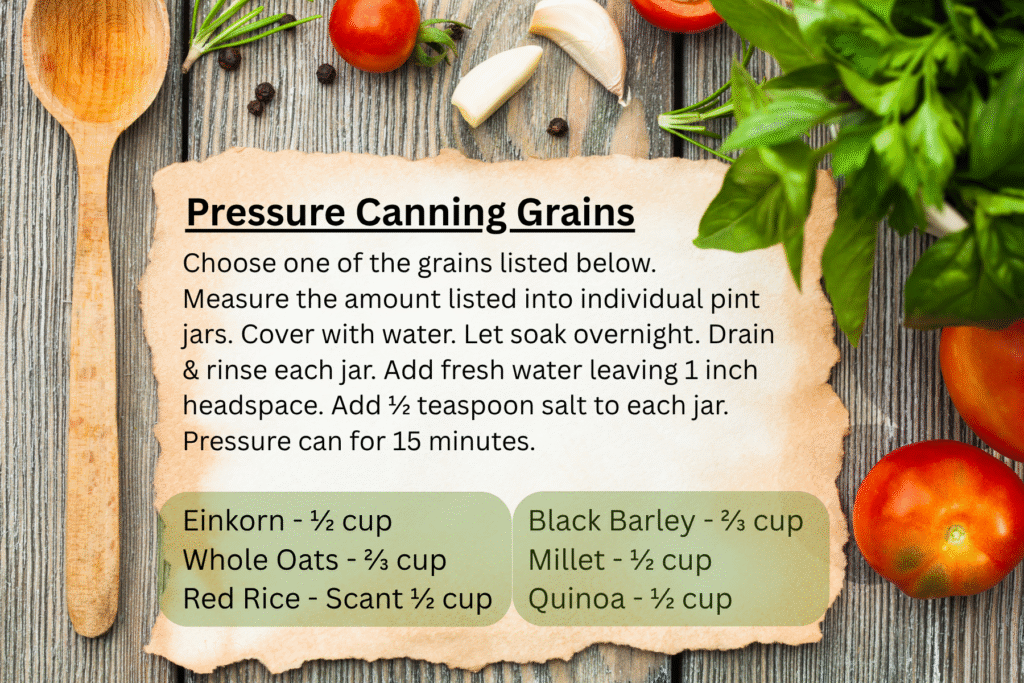
Investing in a good flour grinder is a lifelong investment. This might take you time to save for. In the meantime, there are other ways you can prepare whole grains. Coffee grinders, food processors, and quality blenders can help. One of my favorites is to pressure can whole grains and eat them like porridge, or rice pilafs. Finally, we have available today, an electric automatic pressure canner that makes canning extremely simple. Click here to see it. I put around ½ cup of whole grain into a pint jar that I fill with water. I let it soak overnight. In the morning, I drain off the water and refill with fresh water. I add ½ teaspoon of salt per jar and pressure can at 10 psi for 15 minutes. Not only is this extremely easy, but it is so handy to have oatmeal, rice, barley, etc all ready to eat by simply removing the lid!
Sprouting Grains
Sprouting grains is also very easy to do and greatly increases their nutrition (up to 400%!). I love a breakfast of sprouted whole oats, sprouted raw buckwheat, sprouted raw sunflower seeds, and walnuts (equal portion of each). I add raisins, shredded apple or banana and some fresh almond milk. Yum! (I soak them for one hour, then sprout for 24 hours. Even though the walnuts do not sprout, I add them to the mix and soak and sprout along with the other seeds. Sprouting grains is also very handy when traveling.
Research the studies done on Ulcerative Colitis and sprouted barley!
You can also soak whole grains overnight and blend them in the morning (with the soaking water) for preparing any recipe that is in batter form. For example pancakes, muffins, batter breads, etc.
Selecting a Flour Grinder
A good flour grinder is one that doesn’t heat up the grain while grinding it. I also prefer grinders that are not super loud. Here are some good choices:
Wondermill Electric Flour Grinder
Here is a traditional manual stone grinder
I own this one and love it – My husband added a motor, belt, and electrical switch to mine.
I also own this travel sized hand grinder. It works great and only costs $80
Where to Purchase Ancient Grains
My favorite place to purchase ancient grains is Azure Standard. If you enter my personal share code: WendyJackson2, I will receive $25 in purchasing credit after you spend $100. Once you create an account you can also share with your friends. I no longer shop at grocery stores, but I still place a once-a-month order with Azure Standard. They have everything you could ever need, the quality is fantastic, they work directly with the farmers, and they are believers. You can also purchase from Ancient Grains, and Country Life Natural Foods.
Which Grains are God-Made
Einkorn = original wheat. Most people sensitive to gluten can digest this wheat. Modern wheat contains a different TYPE of gluten. A gluten that has never existed in history before. A gluten God didn’t make. I like this recipe book for baking with Einkorn. Einkorn has a very delicious flavor!
Khorasan Wheat = an older form of wheat. Sometimes called Emmer or Spelt. This wheat sprouts really well and bakes more like modern wheat than Einkorn does.
Black Nile Barley = original barley. I was told that this barley was recovered in the archeological dig at Jericho. It is the original barley grown during the spring and used in the feast of Unleavened Bread. While you can make flat bread with it, I like it best added to soups. It also sprouts nicely for fresh juicing barley grass.
I know the above grains are God-made. As for rice and other grains, I tend to look for varieties not sold to the masses. Such as “Red Bran Rice” or purple or black rice.
Here are direct links to the different grains I purchase from Azure Standard:
Buckwheat, hulled (I roast it myself if I want Kasha for pancakes)
Conclusion
I hope you have found this helpful! I love grains so much that I wrote an on-line course about grains that contains 8 chapters with 37 lessons! I just don’t have the time to record the videos for the course until I finish our main curriculum book. Feel free to text me with any questions: 941-209-9356